
Food before pills
Best vitamins for vaginal health
Vaginal health is not its own vitamin aisle, and a pill only fills a measured gap. Immune function, tissue repair, and the meals you already repeat matter more than a special bottle.
Code FRESH is 20% off Subscribe & Save. Checkout opens on tastethesweetspot.com. One-time checkout is on the same product page.
Quick answer
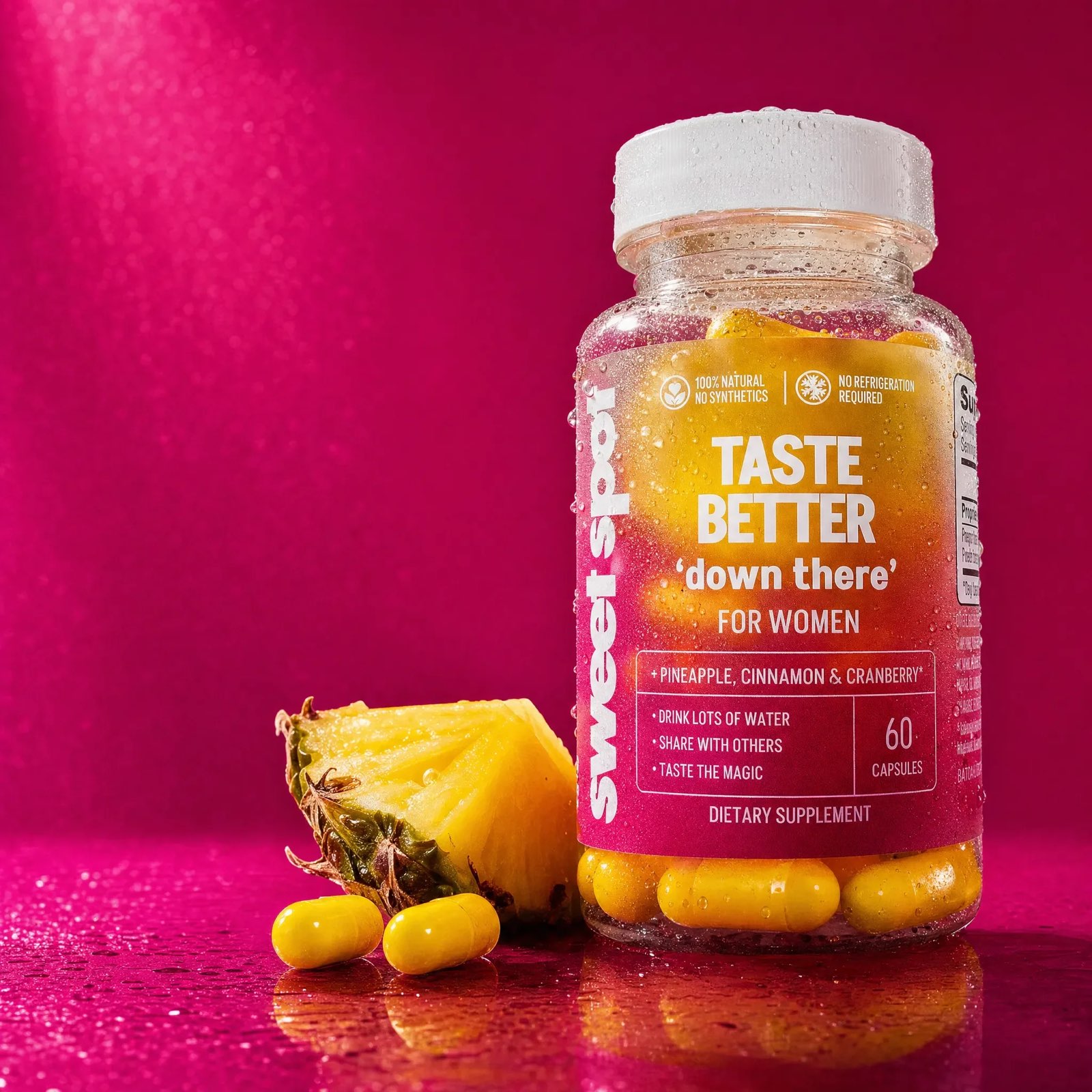
Vitamin D, vitamin C, vitamin E, B vitamins, and zinc are the nutrients most often discussed with vaginal and immune health. They may support tissue and immune function. They do not treat bacterial vaginosis, yeast, or a UTI. Eat the food first. Ask for a vitamin D test before you megadose. Kitty Candy is a different product.
1. Vitamin D: the common gap
Vitamin D receptors show up in reproductive tissue, and low levels are common if you live with little sun or have darker skin. Studies have found low vitamin D alongside higher rates of bacterial vaginosis. That is an association. It is not a prescription, and correcting a deficiency is a doctor’s job, not a blog’s.
Food helps a little: fatty fish, egg yolks, fortified milk or plant milk. For most people the sun and a measured supplement do more than the plate. Get the blood test. Guessing a huge dose is how people overshoot.
2. Vitamin C: antioxidant and collagen
Vitamin C supports immune function and collagen, which is relevant to tissue that has to stay intact. Some clinical settings have studied vaginal vitamin C tablets after BV care. Those are medical products in a study, not a gummy you order for taste.
For daily food, use citrus, bell peppers, strawberries, kiwi, and broccoli. A normal dietary amount is plenty for someone who eats produce. More is not a freshness trick.
3. Vitamin E: tissue, with a limit
Vitamin E is an antioxidant people mention for skin and mucous membranes, and sometimes for dryness around menopause. Evidence that an oral vitamin E pill changes vaginal comfort is limited. Adequate intake still supports the tissues you already have.
Nuts, seeds, spinach, and avocado carry it, and they bring the fat that helps you absorb vitamins A, D, E, and K. If dryness is new, painful, or tied to menopause, that conversation is with your clinician, not with a higher capsule count.
4. B vitamins: the unglamorous set
B6, folate, and B12 sit under cell metabolism, red blood cells, and nerve function. A deficiency shows up as fatigue, weak immunity, and slower tissue repair. Intimate health feels that indirectly. It does not feel it as a flavor switch the same day.
Whole grains, legumes, eggs, and leafy greens cover most of the set. B12 is the hard one for people who eat no animal foods. Hormonal birth control can lower some B vitamins. Mention that to your own doctor if you are deciding on a supplement. We do not publish a clearance for it.
5. Zinc: a small mineral with a ceiling
Zinc is part of immune function and wound healing, including mucosal tissue. A deficiency can leave immune responses sluggish. That is a general fact. It is not a claim that zinc stops a vaginal infection.
Oysters, beef, pumpkin seeds, and lentils are the food sources people can actually repeat. High-dose zinc for weeks can interfere with copper. A little, from food or a modest supplement, is the version that makes sense.
6. Food first
A plate you can repeat beats a new bottle every time the algorithm offers one. Build the week from food, then test the one gap food rarely covers: vitamin D.
- Colorful produce: berries, citrus, peppers, and greens for vitamin C, folate, and fiber.
- Fermented foods: yogurt with live cultures, kefir, or kimchi, if they sit well with you. They are food, not a BV protocol.
- Fats you already cook with: nuts, seeds, avocado, olive oil, and fatty fish so the fat-soluble vitamins have a ride.
- Water, every day. Hydration does not fix a deficiency. It does support mucous membranes.
7. Choosing a supplement
If the plate is not covering a real gap, look for a label that names the nutrient and the amount, a dose near ordinary nutrition rather than a megadose, and third-party testing. A 40-ingredient blend at dust-level amounts is a shopping list, not a plan.
Test vitamin D before you take a heavy dose. It is a common blood test, and it removes the guess. Consistency matters more than an ambitious protocol you quit after a week.
8. Pairings that actually matter
Vitamin D is often discussed with vitamin K2 and magnesium because those nutrients sit in the same bone-and-absorption story. Vitamin C is taken with iron-rich meals when someone is working on low iron. Zinc and copper compete, so a long zinc supplement is a reason to keep copper in mind and to avoid a huge dose.
Take fat-soluble vitamins D, E, and K with a meal that has some fat. Space iron and calcium apart if you take both, because calcium can block iron. One thoughtful formula plus a targeted vitamin D addition, if you are deficient, is calmer than five overlapping bottles.
9. When to talk to your doctor
Supplements support nutrition. They do not diagnose or treat an infection. See a clinician for odor with unusual discharge, itching, burning, pain, fever, or blood. Do the same if you suspect a deficiency, if you are pregnant or breastfeeding, or before you add a new product next to medication.
This page is educational. It is not medical advice, and it is not a reason to insert an oral vitamin.
Where Taste The Sweet Spot fits
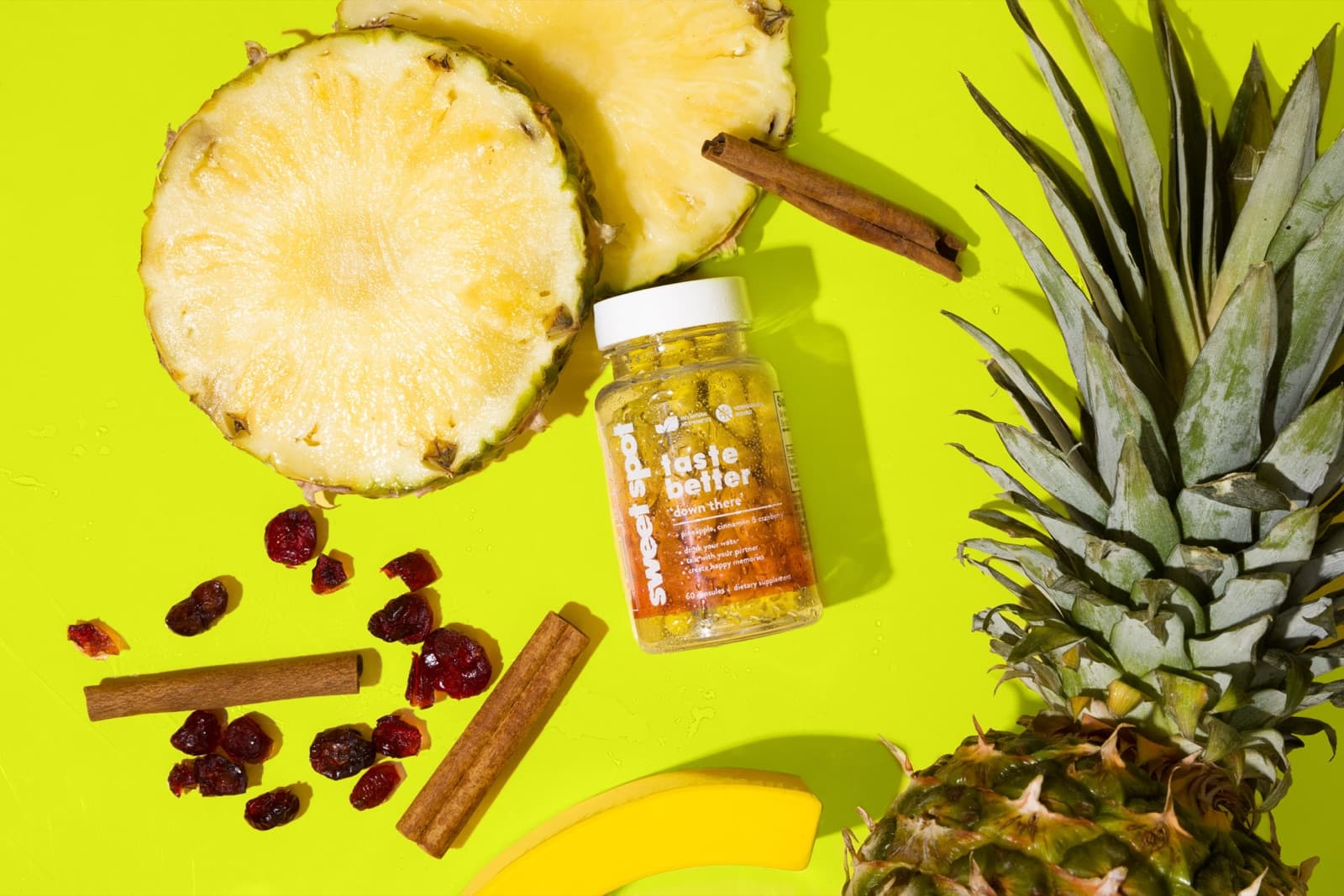
Kitty Candy is not this vitamin list. Women’s Sweet Spot is pineapple, cinnamon, and cranberry. It is not a probiotic. Take 1 capsule in the morning and 1 at night. A 60-count is about 30 days. Judge the habit at 2–4 weeks. Code FRESH is 20% off Subscribe & Save. Larger counts and the full collection are on tastethesweetspot.com. Use it as a daily taste habit if you are well, next to food, not instead of a vitamin D test.

Kitty Candy For Her
Pineapple, cinnamon, and cranberry. 1 morning and 1 night with water. A taste habit, not a probiotic and not infection care.

pH-balanced wipes
An external reset after the gym or before you are close. Not a douche and not a treatment.

His + Hers
Both formulas, when both of you give and receive oral. Otherwise buy the one body you are shopping for.
These statements have not been evaluated by the Food and Drug Administration. This product is not intended to diagnose, treat, cure, or prevent any disease. Updated 2026-10-02.